
02Legal
Documents to Check Before Buying a Plot in India
2 min read
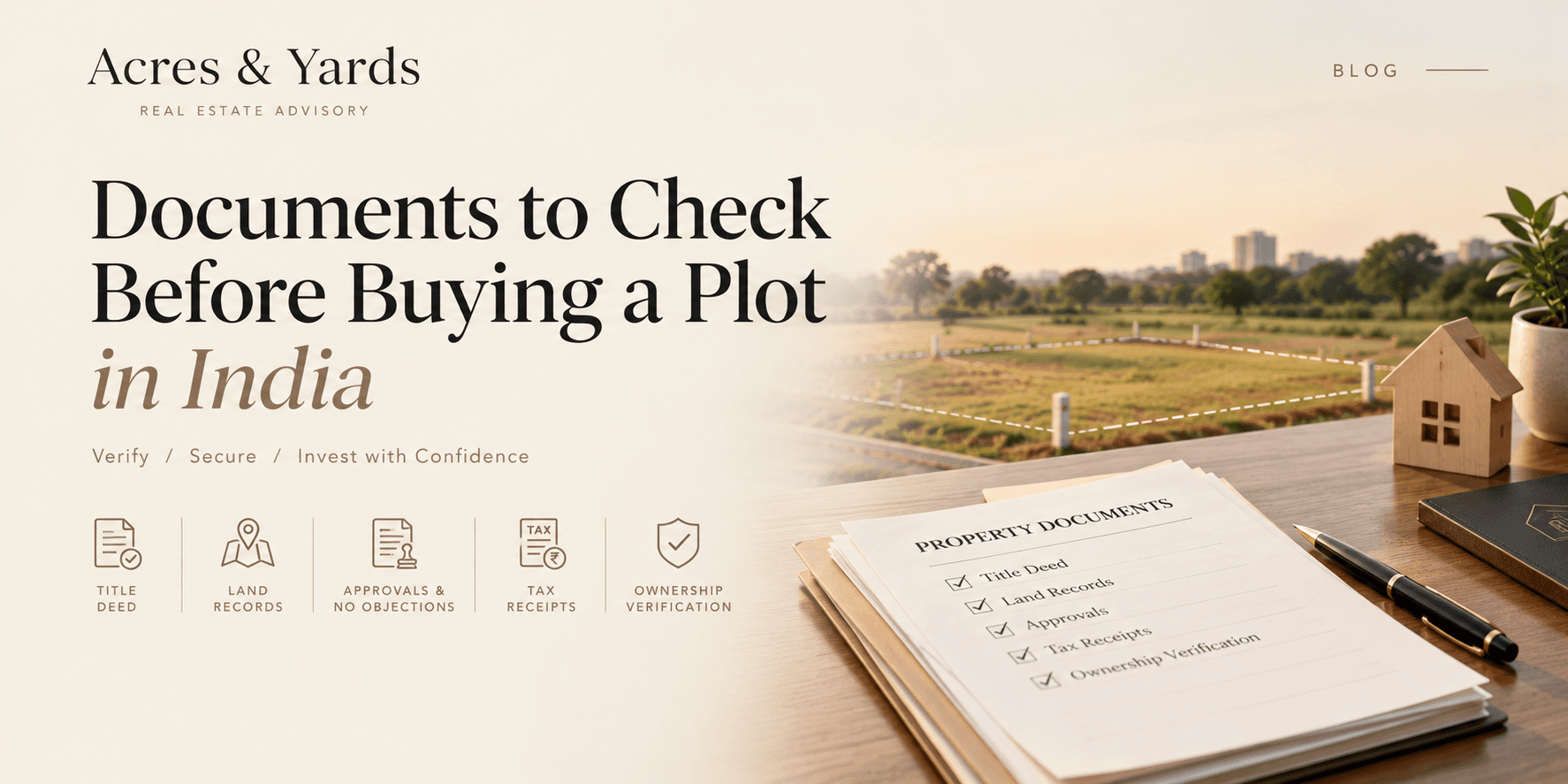
One of the main steps in the building of your dream home is the buying of property. In order to avoid complications in terms of legal aspects concerning your property, you must first check if the property you are going to buy is legal. This way, you are eliminating the chances of facing complications and additional expenses in the future.
Verify the Sale Deed and Ownership
You should start by reading the registered sale deed. From this document, you can determine if the seller truly owns the plot and learn its ownership history. You also need to confirm there is a clear ownership chain of the land without any breaks.
Check the encumbrance certificate
Get an encumbrance certificate to spot transactions, such as mortgages, linked to the plot. This is a step in plot legal verification before making any payment.
Inspect the documents
Verify the land records, mutation entries and details of the plot. Additionally, check that the layout and residential land use of the plot has received the relevant permissions. For plots that were once agricultural land, make sure that conversion permissions have been received.
Verify tax receipts and RERA status
Make sure that there are no dues associated with the plot, for example property tax. For plots in RERA projects, make sure the plot has been registered on the RERA website of the respective state.
Obtain legal counsel
Prior to depositing money, ensure the land and plot have been properly and thoroughly examined for any disputes by a legal professional in property matters. It is better to have plot verification completed.
Make Your Plot Purchase with Confidence
Familiarizing yourself with the documents needed to purchase a land is significant for safeguarding your investment. Ownership records, development approvals, and any documents are important. According to Acres & Yards, buyers should verify all of the documents that are necessary to purchase a plot before making the purchase. Make sure to consult the legal regulations before entering into a contract since the needed documents differ from one state to another as well as from one type of property to another.